

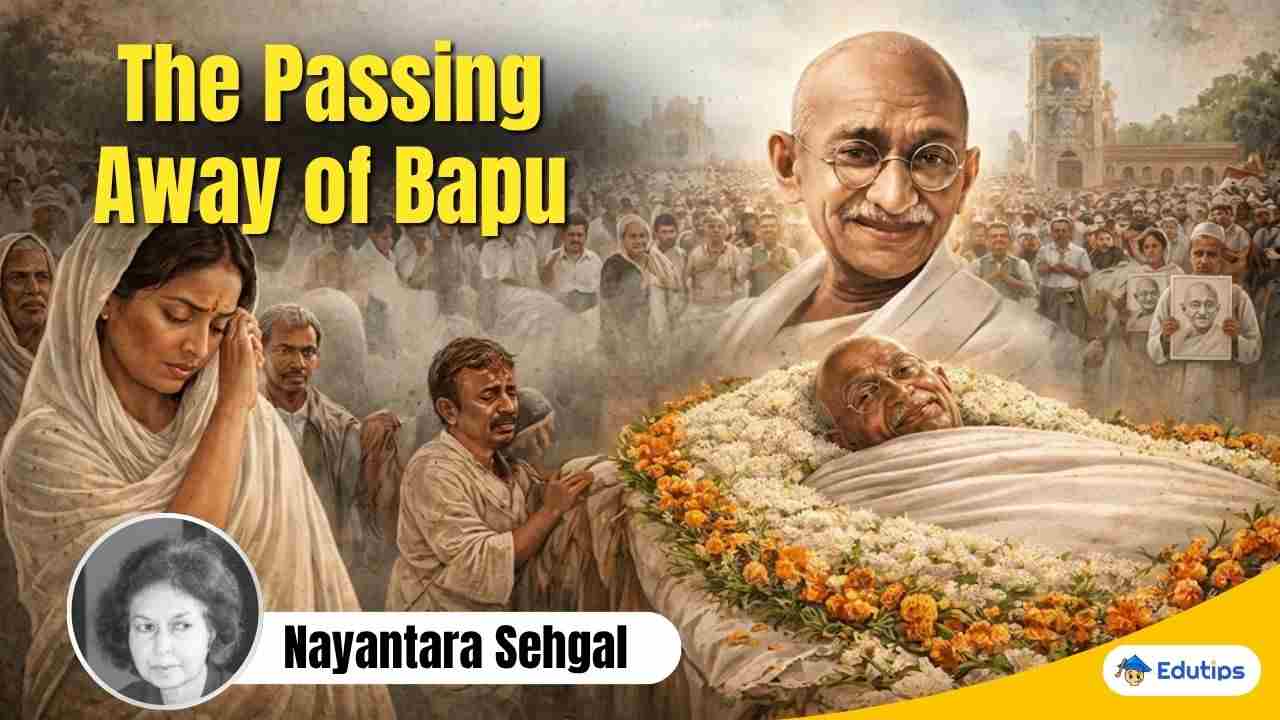
দশম শ্রেণির নয়নতারা সেহগলের লেখা ‘The Passing Away of Bapu’ (Lesson 3) এর মধ্যে মহাত্মা গান্ধীর আকস্মিক প্রয়াণ, গোটা দেশবাসীর গভীর শোক এবং তাঁর চিতাভস্ম বিসর্জনের পর তাঁর আদর্শকে বুকে ধারণ করে এগিয়ে যাওয়ার কথা এখানে খুব সুন্দরভাবে ফুটে উঠেছে। আজকের পোস্টে আমরা এই Lesson এর Summary, Unit Question Answer এবং বাছাই করা বেশ কিছু গুরুত্বপূর্ণ প্রশ্ন ও উত্তর (Question Answer) তোমাদের সাথে শেয়ার করা হল।
| বিষয় | বিবরণ |
|---|---|
| পাঠের নাম (Lesson Name) | The Passing Away of Bapu |
| লেখিকা (Author) | Nayantara Sehgal (নয়নতারা সেহগল) |
| উৎস (Source) | লেখিকার স্মৃতিকথা (memoir) Prison and Chocolate cake থেকে নেওয়া একটি অংশ । |
| মূল বিষয়বস্তু (Theme) | মহাত্মা গান্ধীর মৃত্যুর পরবর্তী ঘটনাবলী এবং এর ফলে লেখিকা ও সমগ্র জাতির শোকের বর্ণনা । |
‘The Passing Away of Bapu’ Nayantara Sehgal (Class 10 English Lesson 3)
Original English:
Nayantara Sehgal (1927-) is one of the first female Indian writers in English to receive wide recognition. Her fiction deals with India's response to the crisis brought about by political changes. She won the Sahitya Academy award in 1986 for her novel Rich like Us. The text, an extract from Nayantara Sehgal's memoir Prison and Chocolate cake, recounts the incidents following the death of Gandhiji. It vividly describes not only the author's personal sense of loss, but also the collective grief of the entire nation at the passing away of Mahatma Gandhi.
বাংলা অনুবাদ:
নয়নতারা সেহগল (১৯২৭-) ইংরেজিতে লেখা প্রথম ভারতীয় মহিলা লেখিকাদের মধ্যে অন্যতম, যিনি ব্যাপক স্বীকৃতি লাভ করেছেন । তাঁর কল্পকাহিনীতে রাজনৈতিক পরিবর্তনের ফলে সৃষ্ট সংকটে ভারতের প্রতিক্রিয়া ফুটে ওঠে । তিনি তাঁর ‘Rich like Us’ উপন্যাসের জন্য ১৯৮৬ সালে সাহিত্য আকাদেমি পুরস্কার লাভ করেন । বর্তমান পাঠ্যাংশটি তাঁর স্মৃতিকথা ‘Prison and Chocolate cake’ থেকে নেওয়া হয়েছে, যেখানে গান্ধীজীর মৃত্যুর পরবর্তী ঘটনাবলী বর্ণনা করা হয়েছে । এটি মহাত্মা গান্ধীর প্রয়াণে শুধুমাত্র লেখিকার ব্যক্তিগত শূন্যতাবোধ নয়, বরং সমগ্র জাতির সম্মিলিত শোকের জীবন্ত বর্ণনা দেয় ।
‘The Passing Away of Bapu’ By Nayantara Sehgal Class 10 Summary – ইংরেজি ও বাংলা অর্থ
English Summary:
The text describes the sorrowful events following the assassination of Mahatma Gandhi on January 30, 1948. Upon hearing the news, a shocked and grieving crowd gathered at Birla House. Initially silenced by shock, the people soon began crying and pushing each other to get a glimpse of Bapu. The next day, thousands walked silently in his funeral procession. Walking with Bapu held deep symbolic meaning, as he had walked across India with the common people, turning a simple act into a joyful effort. Later, his ashes were taken to Allahabad by a special train filled with flowers and devotional songs (bhajans), where they were immersed in the Ganges. Returning to Delhi, the author initially felt lost and unprotected, as if a "magic circle" had vanished with Bapu's passing. However, she eventually found courage, realizing that Bapu's values were not weak and his spirit would continue to live on within the millions of ordinary people he had awakened.
বাংলা অনুবাদ:
এই পাঠ্যাংশটিতে ১৯৪৮ সালের ৩০শে জানুয়ারি মহাত্মা গান্ধীর গুপ্তহত্যার পরবর্তী বিষাদময় ঘটনাবলী তুলে ধরা হয়েছে । খবর পেয়ে শোকস্তব্ধ মানুষ বিড়লা হাউসের সামনে জড়ো হয় । প্রথমে শোকে বাকরুদ্ধ থাকলেও, একটু পরেই মানুষ কাঁদতে শুরু করে এবং বাপুকে একবার দেখার জন্য ধাক্কাধাক্কি করতে থাকে । পরের দিন, হাজার হাজার মানুষ তাঁর শেষযাত্রায় নীরবে পায়ে হেঁটে অংশগ্রহণ করে । বাপুর সাথে হাঁটার একটি গভীর প্রতীকী অর্থ ছিল, কারণ তিনি সাধারণ মানুষের সাথে সারা ভারত পায়ে হেঁটে ঘুরেছিলেন এবং এই সাধারণ কাজটিকে একটি আনন্দদায়ক প্রচেষ্টায় পরিণত করেছিলেন । কিছুদিন পর, ফুল ও ভজনে মুখরিত একটি বিশেষ ট্রেনে করে তাঁর চিতাভস্ম এলাহাবাদে নিয়ে যাওয়া হয় এবং তা গঙ্গা নদীতে বিসর্জন দেওয়া হয় । দিল্লিতে ফিরে এসে লেখিকা প্রথমে নিজেকে খুব অসহায় ও অরক্ষিত অনুভব করেন, যেন বাপুর মৃত্যুর সাথে সাথে একটি “জাদুর বলয়” অদৃশ্য হয়ে গেছে । তবে শেষ পর্যন্ত তিনি সাহস সঞ্চয় করে উপলব্ধি করেন যে, বাপুর আদর্শগুলি দুর্বল নয়; তিনি যে লক্ষ লক্ষ সাধারণ মানুষকে জাগরিত করেছিলেন, তাদের মধ্যেই তাঁর চেতনা চিরকাল বেঁচে থাকবে ।
‘The Passing Away of Bapu’ Class 10 Unit Wise Question Answer | Class 10 English Lesson 3
‘The Passing away of Bapu’ Unit 1 Question Answer
1. Choose the correct alternative to complete the following sentences:
(a) Gandhiji had been shot on his way to – (iii) a prayer meeting (একটি প্রার্থনা সভা)
(b) The author came to know of Gandhiji’s death by – (ii) a telephone call (একটি টেলিফোন কল)
(c) When one is faced with the shock of a loved one’s death, one – (i) whimpers (ফিসফিস করে কাঁদে বা গোঙানি দেয়)
2. Fill in the chart with information from the text:
(a) date on which Gandhiji was shot dead: 30th January, 1948 (৩০শে জানুয়ারি, ১৯৪৮)
(b) place where Gandhiji breathed his last: Birla House (বিড়লা হাউস)
(c) information given by the broadcast: The people of India that their Bapu was no more (ভারতের জনগণকে জানানো হয় যে তাদের বাপু আর নেই)
3. State whether the following statements are True or False. Provide sentences/ phrases/words in support of your answer:
(a) The author received an urgent telephone call in the morning. – False(মিথ্যা)
Supporting statement: “I was having tea at home on the evening of 30th January, 1948, when I was called to Birla house by an urgent telephone.” (আমি ১৯৪৮ সালের ৩০শে জানুয়ারি সন্ধ্যায় বাড়িতে চা খাচ্ছিলাম, তখন একটি জরুরি টেলিফোনে আমাকে বিড়লা হাউসে ডাকা হয়।)
(b) People attempted to break into the Birla House. – True(সত্য)
Supporting statement: “They jostled one another in a stampede to break into the house.” (তারা বাড়ির ভিতরে ঢোকার জন্য হুড়োহুড়ি করে একে অপরকে ধাক্কা দিচ্ছিল।)
(c) The news of Gandhiji’s death did not shock the people. – False(মিথ্যা)
Supporting statement: “The people were too stunned to speak in the beginning.” (শুরুতে লোকেরা এতটাই হতবাক ছিল যে কথা বলতে পারছিল না।)
‘The Passing away of Bapu’ Unit 2 Question Answer
4. Choose the correct alternative to complete the following sentences:
(a) Gandhiji’s funeral was to take place – (iii) one day after his death (তাঁর মৃত্যুর এক দিন পর)
(b) Padmasi was Mrs. Naidu’s – (iv) daughter (কন্যা বা মেয়ে)
(c) While walking, Bapu used to carry in his hand a/an – (ii) staff (লাঠি)
5. Complete the following sentences with information from the text:
(a) Thousands of people wept, trying to touch Bapu’s feet. (বাপুর পা ছুঁতে।)
(b) The author was among people for whom walking with Bapu had a special meaning. (বাপুর সাথে হাঁটার একটি বিশেষ অর্থ ছিল।)
(c) To walk is to make slow progress. (ধীরগতিতে এগোনো।)
6. Fill in the chart with information from the text:
| Statement | Reason |
|---|---|
| (a) It was impossible to move. | Because of the thick crowd. |
| (b) Padmasi declared that they would walk with Gandhiji in the funeral procession. | It was the last time they would be walking with Bapu. |
| (c) To walk was often the only way open to the average Indian. | It required no vehicle except his own body and cost him nothing but his energy. |
‘The Passing away of Bapu’ Unit 3 Question Answer
7. Choose the correct alternative to complete the following sentences:
(a) Gandhiji’s ashes were taken to – (ii) Allahabad (এলাহাবাদ)
(b) A huge crowd had gathered by the – (i) Ganges (গঙ্গা নদী)
(c) Gandhiji awakened people to one another’s – (iii) suffering (কষ্ট বা দুর্ভোগ)
8. Complete the following sentences with information from the text:
(a) People on the special train sang bhajans. (ভজন গাইছিল।)
(b) The author felt she had grown up within a magic circle. (একটি জাদুর বলয়।)
(c) Bapu had passed away but his India would continue to live in his children. (তাঁর ভারতবর্ষ তাঁর সন্তানদের মধ্যে বেঁচে থাকবে।)
9. Fill in the chart with information from the text:
| Cause | Effect |
|---|---|
| (a) They could feel Gandhiji’s presence amid the flowers and the songs. | People did not weep anymore. |
| (b) With Bapu’s passing away. | The magic circle vanished. |
| (c) Her values were not so weak. | The author felt that she wouldn’t lose courage so easily. |
‘The Passing Away of Bapu’ Class 10 Extra Question Answer WBBSE (Unit – 1, 2, 3)
Unit 1 – Extra Question Answer (One Liner)
★ The date and year when Gandhiji was shot dead: 30th January, 1948 (৩০শে জানুয়ারি, ১৯৪৮).
★ What the author was doing when she received the urgent telephone call: Having tea (চা খাচ্ছিলেন).
★ The place where the author was urgently called to: Birla House (বিড়লা হাউস).
★ Where Gandhiji was going when he was shot: A prayer meeting (একটি প্রার্থনা সভায়).
★ The physical reaction of the author as she got into the car: Numb with shock (শোকে হতবাক/অবশ).
★ How the news of Bapuji’s death spread through Delhi: Like a flame fanned by wind (বাতাসে উসকে দেওয়া আগুনের মতো).
★ What could be seen out of every window at Birla House: A brown blur of faces (মুখের একটি অস্পষ্ট বাদামী প্রতিচ্ছবি).
★ The condition of the gathered people in the beginning: Too stunned to speak (কথা বলার মতো অবস্থাতেও ছিল না/স্তব্ধ).
★ When the people calmed down a little: When it was announced they could see Gandhiji before the funeral (যখন ঘোষণা করা হল তারা শেষকৃত্যের আগে গান্ধীজীকে দেখতে পাবে).
★ What the mourning people looked like to the author: Lost children (হারিয়ে যাওয়া শিশুদের মতো).
Unit 2 – Extra Question Answer (One Liner)
★ When Gandhiji’s funeral was scheduled to take place: The day after his death (তাঁর মৃত্যুর পরের দিন).
★ The person who spoke for all to walk in the funeral procession: Padmasi (পদ্মসী).
★ The identity of Padmasi: Mrs Naidu’s daughter (মিসেস নাইডুর মেয়ে).
★ How Bapu’s body was carried during the procession: On an open truck covered with flowers (ফুলে ঢাকা একটি খোলা ট্রাকে).
★ The reason why it was impossible to move forward: Because of the thick crowd (প্রচণ্ড ভিড়ের কারণে).
★ What the thousands of weeping people desperately tried to do: Touch Bapu’s feet (বাপুর পা ছুঁতে).
★ What Bapu used to hold in his hand while walking: A staff (একটি লাঠি).
★ What ‘to walk’ actually means according to the text: To make slow progress (ধীরগতিতে এগোনো).
★ What the act of walking cost an average Indian: Nothing but his energy (তার নিজস্ব শক্তি ছাড়া আর কিছুই নয়).
★ What Gandhiji successfully transformed into a joyful effort: The commonplace necessity of walking (হাঁটার মতো সাধারণ প্রয়োজনকে).
Unit 3 – Extra Question Answer (One Liner)
★ Where Gandhiji’s ashes were taken by a special train: Allahabad (এলাহাবাদ).
★ How the compartment of the special train was decorated: Decked with flowers (ফুলে সজ্জিত ছিল).
★ What the people on the special train were singing: Bhajans (ভজন).
★ The reason why people did not weep anymore on the train: They could feel Gandhiji’s presence (তারা গান্ধীজীর উপস্থিতি অনুভব করতে পারছিল).
★ The river where Gandhiji’s ashes were finally immersed: The Ganges (গঙ্গা নদী).
★ How the author felt immediately after returning to Delhi: At sea / unprotected (দিশেহারা / অরক্ষিত).
★ What the author and other young people were during the freedom movement: Merely onlookers (শুধুই দর্শক).
★ What the author felt she had grown up within: A magic circle (একটি জাদুর বলয়).
★ What Bapu brought the millions of ordinary folk out of: Indifference (উদাসীনতা).
★ Where Bapu’s India would continue to live after his passing: In his children (তাঁর সন্তানদের মধ্যে).
আজকের পোস্টে মাধ্যমিক ইংরেজি বিষয় এর Nayantara Sehgal লেখা গল্প ‘The Passing Away of Bapu’ এর Summary, প্রত্যেক Unit এর সমাধান এবং Unit ভিত্তিক বাছাই করা অতিরিক্ত কিছু One Liner প্রশ্ন উত্তর তোমাদের সাথে শেয়ার করা হল। যেগুলি তোমাদের পরীক্ষার প্রস্তুতি নিতে সহায়তা করবে।
| Details | Link |
|---|---|
| মাধ্যমিক প্রস্তুতি WhatsApp গ্রুপ (যারা ইতিমধ্যে জয়েন আছো আর জয়েন হওয়ার দরকার নেই..) | |
| Class 10 মাধ্যমিকের আরো অন্যান্য বিষয়ের নোটস → | Click Here » |
The passing away of bapu bengali meaning unit 3 | The Passing Away of Bapu Class 10 Extra question answer | The Passing away of Bapu Unit 3 question answer
আমাদের হোয়াটসঅ্যাপ ও টেলিগ্রাম Study গ্রুপে যুক্ত হোন -